


 Weather
 Entertainment
Blog
Why Do Humans Cry Emotional Tears? 7 Surprising Reasons Explained

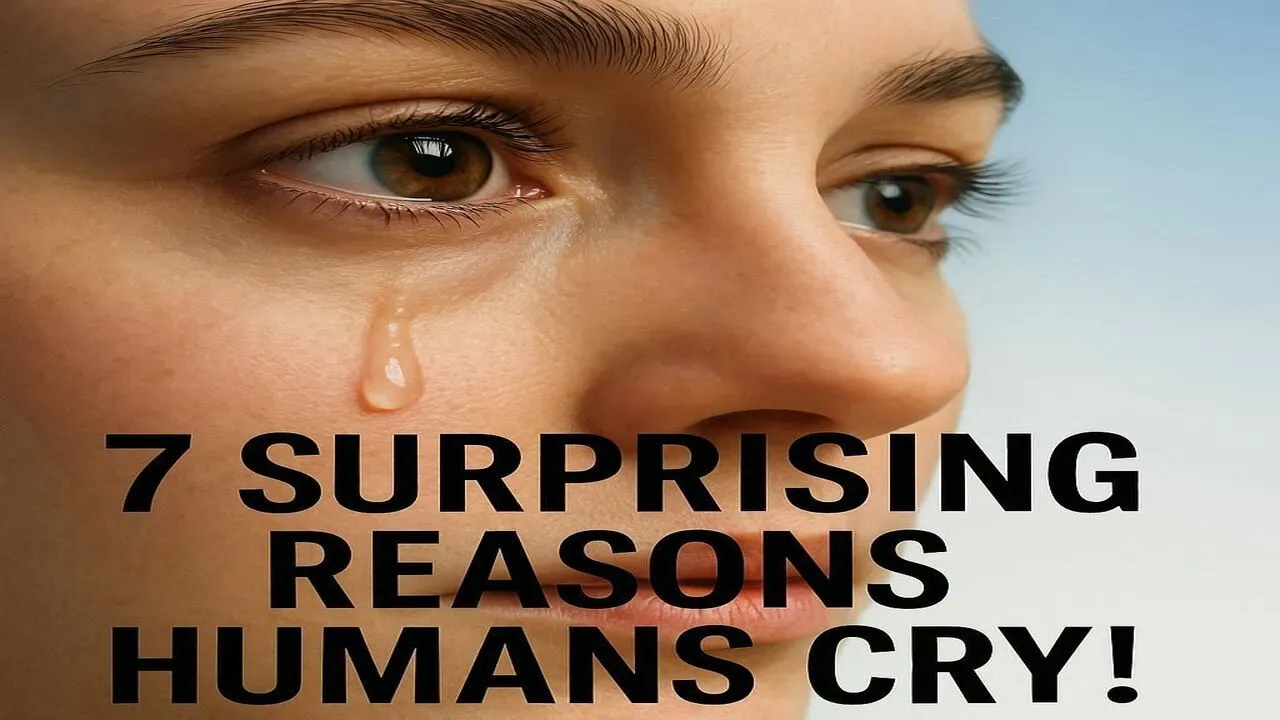
Why do humans cry emotional tears? This simple question reveals one of the most mysterious behaviors in human biology. While animals may shed tears to lubricate their eyes, humans are the only species known to cry due to emotions. Sadness, joy, frustration, empathy, and even overwhelming happiness can trigger tears. This unique trait has fascinated scientists and psychologists for centuries. Let’s explore seven surprising reasons why humans cry emotional tears.
1. Tears Help Release Stress Chemicals
Biologists have found that emotional tears contain stress-related hormones like Adrenocorticotropic hormone and Prolactin. When these substances are released through tears, they may help reduce stress levels in the body. Unlike reflex tears, which wash away dust or irritants, emotional tears seem designed to cleanse the body of stress, explaining why crying can feel like a physical release.
2. Crying Activates the Body’s Relaxation Response
Crying emotional tears can also trigger the Parasympathetic nervous system, which promotes relaxation. This system slows the heart rate, lowers blood pressure, and calms the body after stress. That’s why people often report feeling lighter, calmer, or even sleepy after a good cry. It’s like the body’s natural reset button after emotional overload.
3. Emotional Tears Strengthen Social Bonds
Humans are deeply social beings, and emotional tears play a role in communication. Crying signals vulnerability, which encourages empathy and support from others. Studies suggest that seeing someone cry increases the release of Oxytocin—the bonding hormone—in observers, making them more likely to offer comfort. This ability to form stronger social connections might have helped humans survive in groups.
4. Tears Communicate Feelings Without Words
Emotional tears act as a silent language. When words fail, tears tell others that something deeply important is happening inside us. This nonverbal signal helps people connect even when they don’t share a spoken language. Babies, for example, use crying to communicate long before they learn to talk. Adults continue this instinct when emotions become too overwhelming to express verbally.
5. Crying May Improve Emotional Clarity
Interestingly, emotional tears may also help people think more clearly afterward. Psychologists suggest that crying forces the brain to slow down, reflect, and process what’s causing distress. This pause can lead to better decision-making and emotional understanding. That’s why many people gain new perspective after crying—it clears not just the eyes, but the mind too.
6. Culture Shapes When We Cry, Not Why We Cry
People cry in every culture, showing that the urge to shed emotional tears is universal. However, cultural rules influence when and how openly people cry. Some cultures see public crying as a sign of strength, while others see it as weakness. Yet the underlying biology remains the same everywhere, proving that the root cause of emotional tears is hardwired into human nature.
7. Emotional Tears Are Linked to Self-Awareness
Perhaps the most profound reason humans cry emotional tears is our high level of self-awareness. We understand our own mortality, dreams, and failures more deeply than any other species. This complex inner life can create powerful emotions that overflow as tears. Emotional crying may be an unavoidable side effect of having such a deeply conscious mind.
Humans cry emotional tears for many intertwined reasons—biological, psychological, and social. These tears reduce stress, strengthen relationships, and express our deepest feelings without words. They also highlight what makes us uniquely human: our capacity for profound emotions and deep social connections.
So next time you cry, remember — it’s not a sign of weakness. It’s a sign of being beautifully human.
-
 Trending
- Daily Horoscope Today: Zodiac Predictions for All Signs
- Stock Market Christmas 2025 Holiday: NSE BSE Closed

- 7 Daily Habits That Can Help You Live Beyond 90

- Astrospeak Today Horoscope: 12 Powerful Zodiac Predictions
- Vikrant Massey Best Actor Award – 5 Stunning Highlights from the 71st National Film Awards

- 5 Shocking Facts About Suryakumar Yadav’s ICC Fine Explained

- Mumbai Rain Alert: IMD Issues Orange Warning