


 Weather
 Entertainment
Blog
Deadly Catastrophic Odisha Landslide Kalinga Ghat: Top 5 Shocking Impacts


A massive Odisha landslide Kalinga Ghat struck Kandhamal district on the night of September 16, 2025, causing widespread disruption. Continuous heavy monsoon rains had saturated the slopes, leading to a sudden collapse that blocked the highway connecting Kandhamal and Ganjam districts. Vehicles were stranded, villagers were alarmed, and authorities immediately activated emergency response teams.
This event highlights the vulnerability of hilly regions during extreme rainfall and underscores the urgent need for disaster preparedness.
Impact of Odisha Landslide Kalinga Ghat on Road Connectivity
The Odisha landslide Kalinga Ghat caused major blockages on the main highway, leaving hundreds of vehicles stranded. The debris consisted of mud, rocks, and fallen trees, making passage impossible. Travelers described loud rumbling sounds as the hillside collapsed, with dust clouds and falling boulders creating a terrifying scene.
This highway is critical for connecting Kandhamal and Ganjam districts, as well as for transporting essential goods. The landslide disrupted supply chains, delaying food, medical supplies, and emergency services.
Monsoon Rains: The Primary Cause of Odisha Landslide Kalinga Ghat
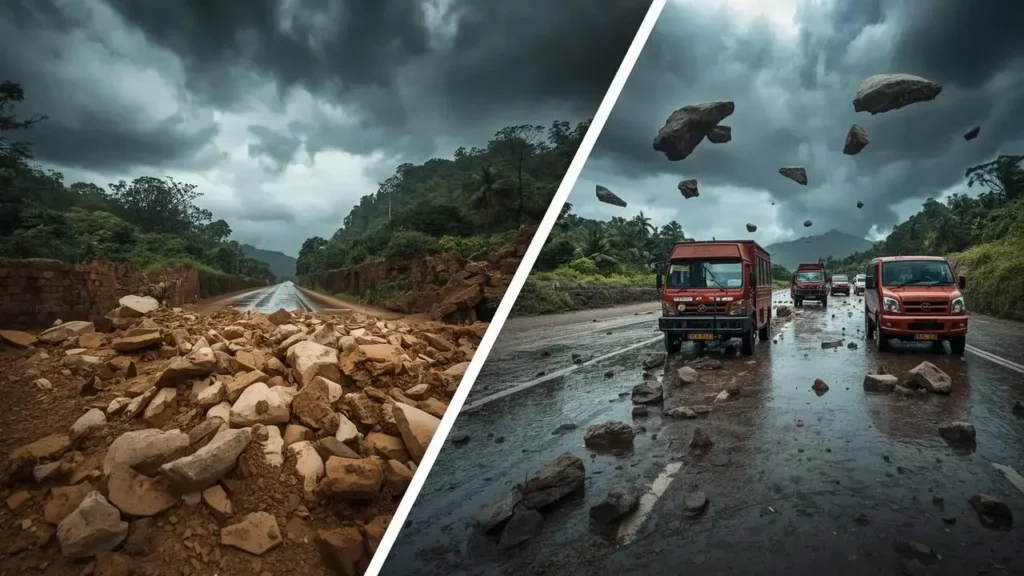
The Odisha landslide Kalinga Ghat was triggered by days of relentless monsoon rainfall. Heavy precipitation saturated the soil, reducing slope stability and making landslides inevitable. Experts note that Kalinga Ghat’s steep terrain, combined with deforestation and human activity, increases susceptibility to such disasters.
Climate change and erratic monsoon patterns are worsening these events, meaning landslides like the one at Kalinga Ghat may occur more frequently in the future.
Immediate Disruptions and Community Impact
The Odisha landslide Kalinga Ghat created widespread chaos:
- Road Blockage: The main highway is fully obstructed, halting traffic in both directions.
- Stranded Travelers: Cars, buses, and trucks remain stuck, with no immediate alternative route available.
- Village Impact: Homes near the slopes faced threats from debris and mudslides.
- Supply Chain Disruption: Delivery of food and medical supplies to nearby districts was delayed.
- Emergency Response Challenges: Teams must navigate unstable terrain while clearing the massive debris.
Local authorities have been forced to divert traffic and warn residents to avoid the area until the road is cleared.
Emergency Response to Odisha Landslide Kalinga Ghat
Disaster management teams were mobilized immediately after the Odisha landslide Kalinga Ghat. Heavy machinery, including excavators and cranes, is being used to remove boulders and mud from the road.
Authorities issued safety advisories:
- Avoid traveling through Kalinga Ghat at night.
- Follow updates from local disaster control rooms.
- Keep emergency kits ready if trapped due to blocked roads.
Residents were asked to remain vigilant, and communities near unstable slopes were prepared for potential evacuation.
Risks of Further Landslides
Despite ongoing relief efforts, the Odisha landslide Kalinga Ghat site remains highly vulnerable. Continued rainfall may trigger additional landslides. Experts advise residents and travelers to stay alert, as even minor showers could destabilize the slopes further.
The incident highlights the recurring risk in hilly terrains during monsoon season and the urgent need for infrastructure planning that accounts for geological hazards.
Environmental and Long-Term Considerations
The Odisha landslide Kalinga Ghat serves as a reminder of the need for sustainable environmental management:
- Slope Stabilization: Reinforce hillsides to prevent future collapses.
- Reforestation: Vegetation can reduce soil erosion and increase slope stability.
- Infrastructure Planning: Road construction must consider slope stability and drainage.
- Early Warning Systems: Real-time monitoring can alert authorities and locals about potential landslides.
These measures are crucial to reduce risk and protect lives during the monsoon season.

Public Safety Measures
Authorities have issued clear safety recommendations:
- Avoid traveling through Kalinga Ghat until further notice.
- Stay updated with local weather forecasts and alerts.
- Prepare emergency kits including food, water, and medical supplies.
- Evacuate immediately if living near unstable slopes.
- Avoid attempting to drive through debris or waterlogged areas.
Following these precautions can save lives and minimize disruption.
The Odisha landslide Kalinga Ghat on September 16, 2025, underscores the destructive potential of monsoon rains in hilly regions. With roads blocked, communities affected, and emergency teams working tirelessly, the focus remains on rescue, relief, and restoring connectivity.
Long-term preventive measures, including slope stabilization, reforestation, and sustainable infrastructure planning, are essential to avoid future disasters. Travelers and residents are urged to follow safety advisories and remain vigilant as authorities work to restore normalcy.
The Odisha landslide Kalinga Ghat serves as a stark reminder of the power of nature and the importance of disaster preparedness in India’s monsoon-prone regions.
-
 Trending
- Daily Horoscope Today: Zodiac Predictions for All Signs

- Stock Market Christmas 2025 Holiday: NSE BSE Closed

- 7 Daily Habits That Can Help You Live Beyond 90

- Astrospeak Today Horoscope: 12 Powerful Zodiac Predictions

- Vikrant Massey Best Actor Award – 5 Stunning Highlights from the 71st National Film Awards

- 5 Shocking Facts About Suryakumar Yadav’s ICC Fine Explained

- Mumbai Rain Alert: IMD Issues Orange Warning