

 Weather
 Entertainment
Blog
Ganga’s Worst Dry Spell in 1,300 Years – IIT Study Warns Crisis

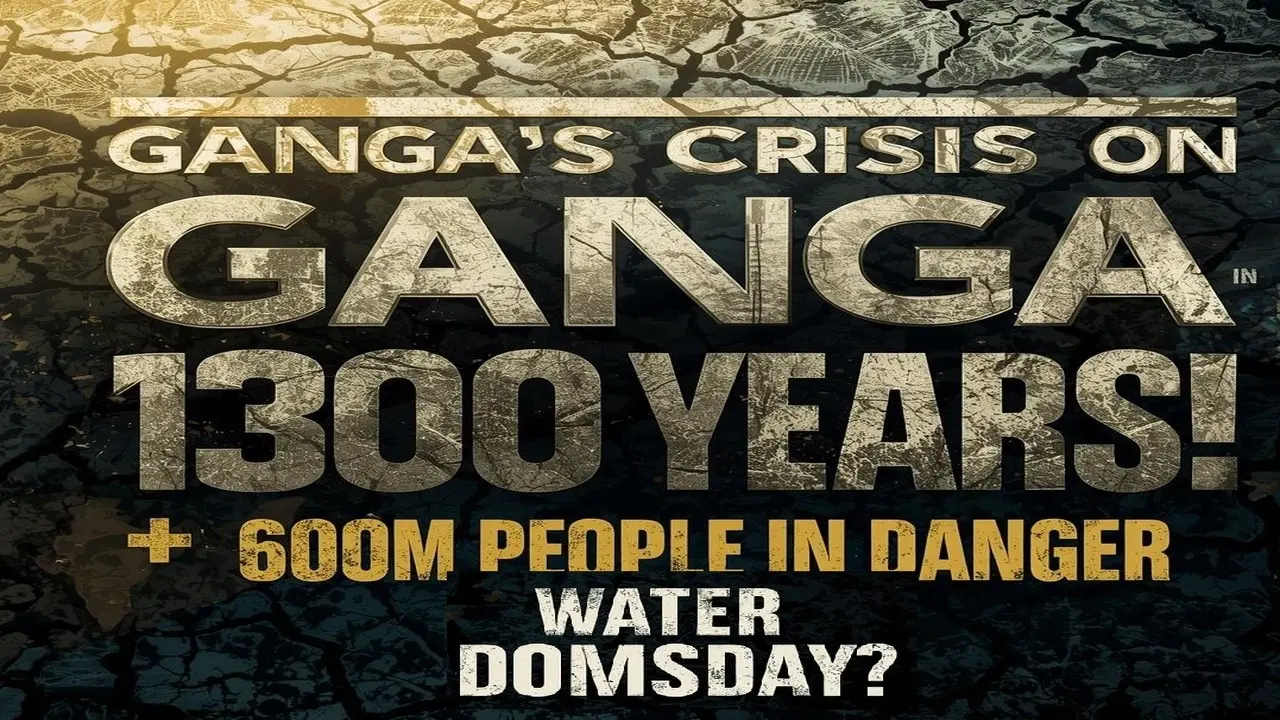
New Delhi, Sep 26 — A shocking IIT study has revealed that the Ganga River, lifeline for over 600 million people, is facing its worst dry spell in more than 1,300 years. Scientists warn this crisis could affect agriculture, drinking water, and India’s overall economy if urgent measures are not taken.
Ganga’s Dry Spell: A Crisis in the Making
The Ganga, often called the “sacred lifeline” of India, has been central to the country’s culture, spirituality, and survival for centuries. Flowing across northern India, it provides drinking water, irrigation, and livelihood to nearly 40% of India’s population.
But a recent study by the Indian Institute of Technology (IIT) has sounded a major alarm — the river is undergoing its worst dry spell in 1,300 years. This unprecedented decline in flow has been linked to climate change, rainfall shortage, and unsustainable usage.
What the IIT Study Reveals
According to researchers, historical data combined with modern climate models show that the Ganga’s current low-flow period is the most severe in recorded history. Scientists studied rainfall trends, monsoon cycles, and ancient tree-ring data to conclude that the river’s depletion is unmatched in the last 13 centuries.
The study highlights three key findings:
- Monsoon Dependence: Weakening monsoons have reduced annual water inflow.
- Temperature Rise: Higher temperatures have accelerated evaporation.
- Over-Extraction: Excessive groundwater pumping has cut natural recharge.
Impact on 600 Million People
The consequences of the dry spell are massive. Around 600 million Indians living in the Ganga basin directly depend on the river. A weaker Ganga means:
- Agricultural Losses: Farmers in Uttar Pradesh, Bihar, and West Bengal face declining crop yields.
- Drinking Water Shortages: Major cities may see water scarcity.
- Hydropower Risks: Reduced flow could affect electricity generation.
- Cultural Impact: Religious rituals and festivals that rely on the river face disruption.
Why This Matters Globally
The Ganga basin is not just a regional issue — it is a global climate concern. The river supports one of the world’s largest populations and is crucial for food security. Experts warn that if the crisis deepens, India may face widespread migration, food inflation, and socio-economic instability.
Experts Call for Urgent Action
Environmentalists and policy experts believe this dry spell should be a wake-up call. Immediate steps are needed to protect the river and the millions who depend on it. Suggested measures include:
- Rainwater Harvesting on a mass scale.
- Reducing Groundwater Overuse by promoting drip irrigation.
- Restoring Wetlands that recharge the river.
- Stronger Climate Policies to reduce emissions.
Government Initiatives So Far
The Indian government has launched several projects such as Namami Gange to clean and rejuvenate the river. While progress has been made in sewage treatment and pollution control, experts say water flow and climate adaptation need more attention.
The Cultural Connection
Beyond economics and ecology, the Ganga holds deep spiritual value for millions of Hindus. Pilgrimages, rituals, and festivals are tied to its sacred waters. Any long-term depletion would not only hurt livelihoods but also impact India’s cultural heritage.
A Warning for the Future
The IIT study is a reminder that the climate crisis is not distant — it is already here. The fate of the Ganga reflects the challenges that rivers worldwide may soon face. Unless urgent action is taken, India could witness one of its gravest water crises in modern history.
🌱 Conclusion
The Ganga’s worst dry spell in 1,300 years is more than just a scientific finding — it is a national emergency. With 600 million lives at risk, India must act decisively to secure water, agriculture, and cultural heritage. The river’s survival is directly linked to the country’s future.
-
 Trending
- Daily Horoscope Today: Zodiac Predictions for All Signs

- Stock Market Christmas 2025 Holiday: NSE BSE Closed

- 7 Daily Habits That Can Help You Live Beyond 90

- Astrospeak Today Horoscope: 12 Powerful Zodiac Predictions

- Vikrant Massey Best Actor Award – 5 Stunning Highlights from the 71st National Film Awards

- 5 Shocking Facts About Suryakumar Yadav’s ICC Fine Explained
- Mumbai Rain Alert: IMD Issues Orange Warning